It was a week of firsts for INCLUDE. In the space of a few days, the project travelled the length of Italy, from Florence to Palermo, to meet the communities working to turn Europe's fragmented digital landscape into a connected whole. For a project whose entire reason to exist is bringing people together, there could hardly have been a better way to begin.
A debut in Florence: AIOTI Days 2026
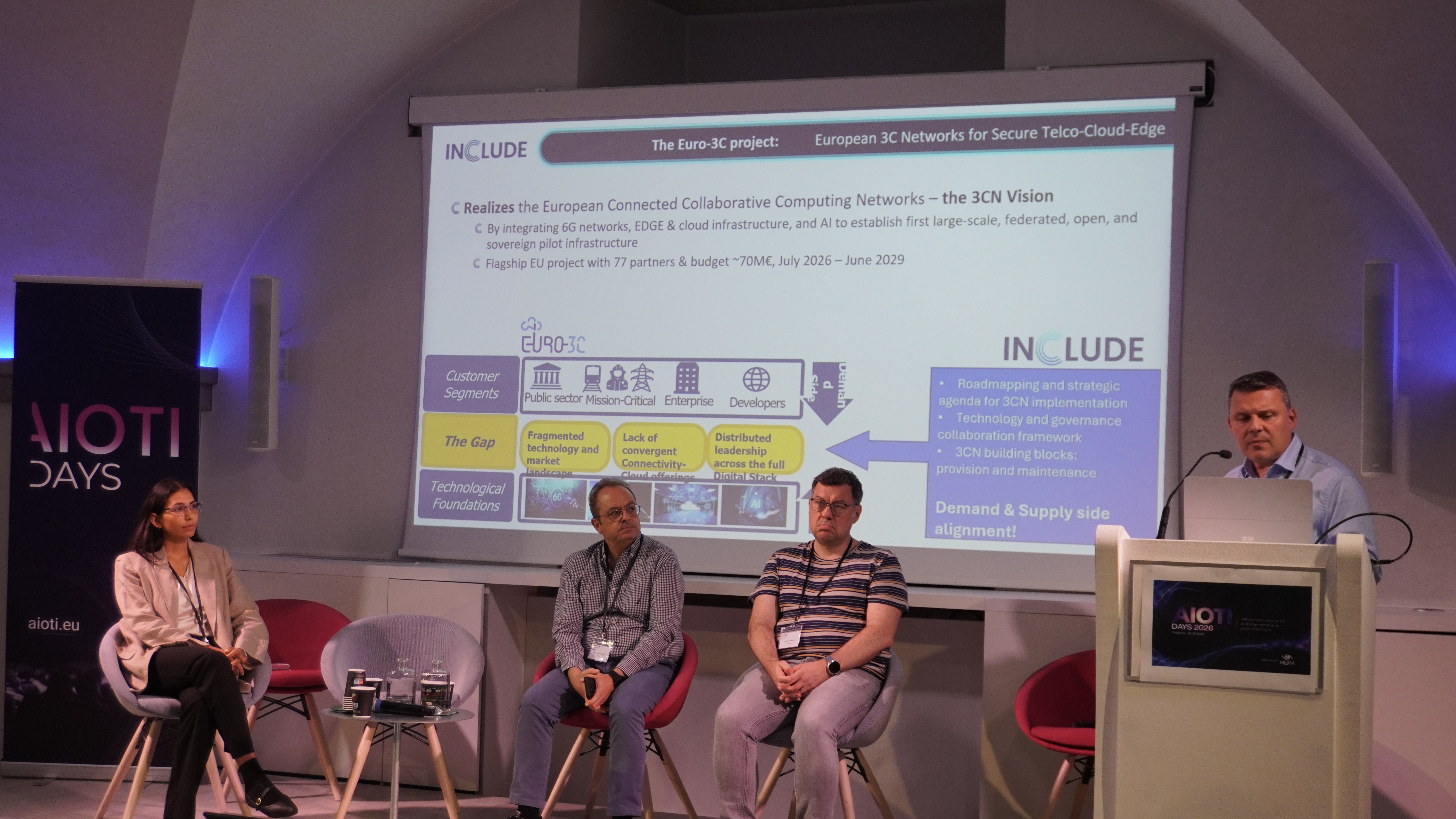
The highlight came on 29 September, when INCLUDE took the stage for the very first time at AIOTI Days 2026 in Florence, with a dedicated session titled "Building Europe's Computing Continuum: From Fragmented Ecosystems to a Connected Market."
After a short introduction to the project, the session opened into a lively panel discussion that went straight to the heart of the challenge. The opening question set the tone: what is really preventing a truly integrated computing continuum in Europe?
The answers were clear and they pointed in a consistent direction. The obstacle, the panel agreed, is not the technology but everything around it.
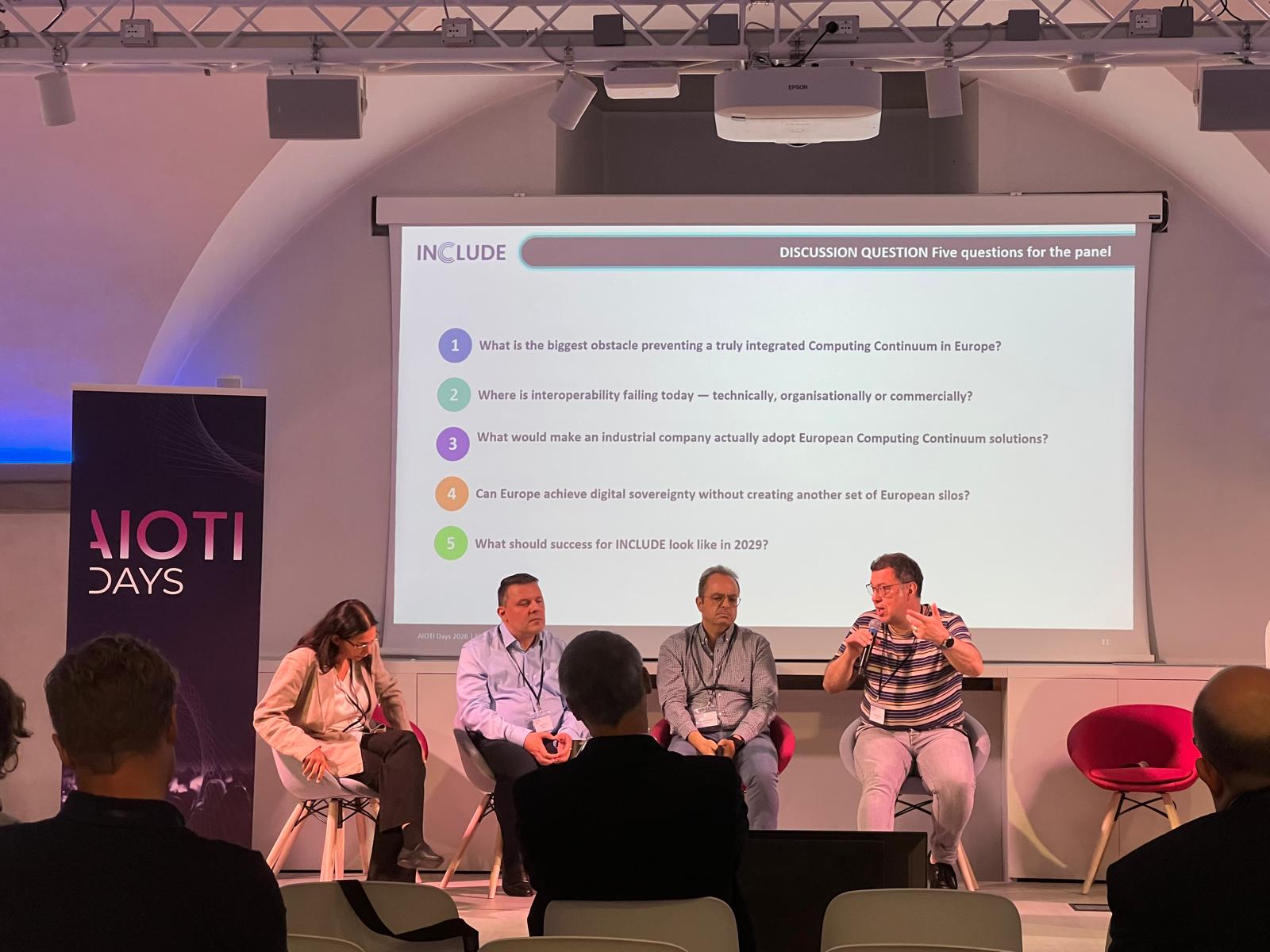
Giovanni Rimassa (Martel Innovate) pointed to industrial support and market habits: cloud customers often ask for the established non-European providers simply because those players arrived first and built up the surrounding support infrastructure. Alexandros Kaloxylos (6G-IA) picked up the thread, describing a European market so fragmented that effort and funding are often doubled or tripled across projects pulling in different directions, with promising results sometimes left to fade once public funding ends. Damir Filipovic (BluSpecs) highlighted the missing pieces of trust, sovereignty and viable business models, while AIOTI itself, as host, acknowledged the shared responsibility of associations in helping the ecosystem overcome that fragmentation.
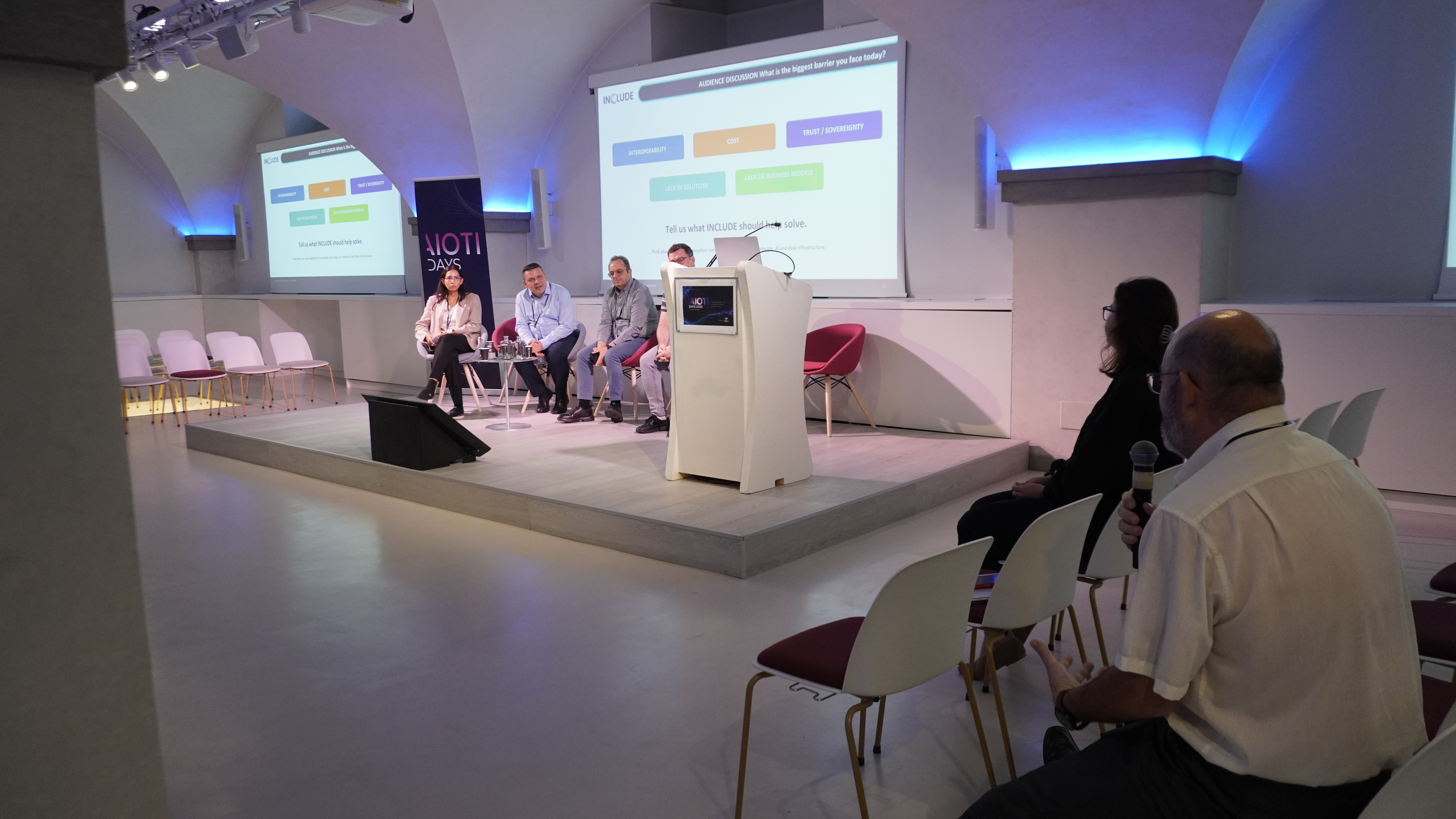
The conversation grew richer still when the audience joined in. One participant suggested that Europe may first need to converge on a single direction, or a common set of standards, before it can convince investors and clients. The panel embraced the point. Alexandros offered a memorable image: what Europe needs is something like mobile roaming, where you do not need to know which provider you are connected to, as long as you can trust it. Giovanni argued that this trust has to be built at the ecosystem level, with connected technologies backed by a strong community of thought leaders. The question of open-source visibility came up too, along with a shared recognition that European solutions need communities able to sustain them long after a project's funding has ended.
And what would success look like by 2029? The panellists each had a version of the same hope: a large-scale pilot drawing together existing and new projects, the ability to give a single clear answer about where Europe is heading, and catalogues, roadmaps and marketplaces that outlive the projects that created them and become part of how Europe plans its digital future.
It was exactly the kind of cross-ecosystem conversation INCLUDE was created to enable. A strong start, and only the beginning.
A listening stop in Palermo: INSIDE Connect 2026
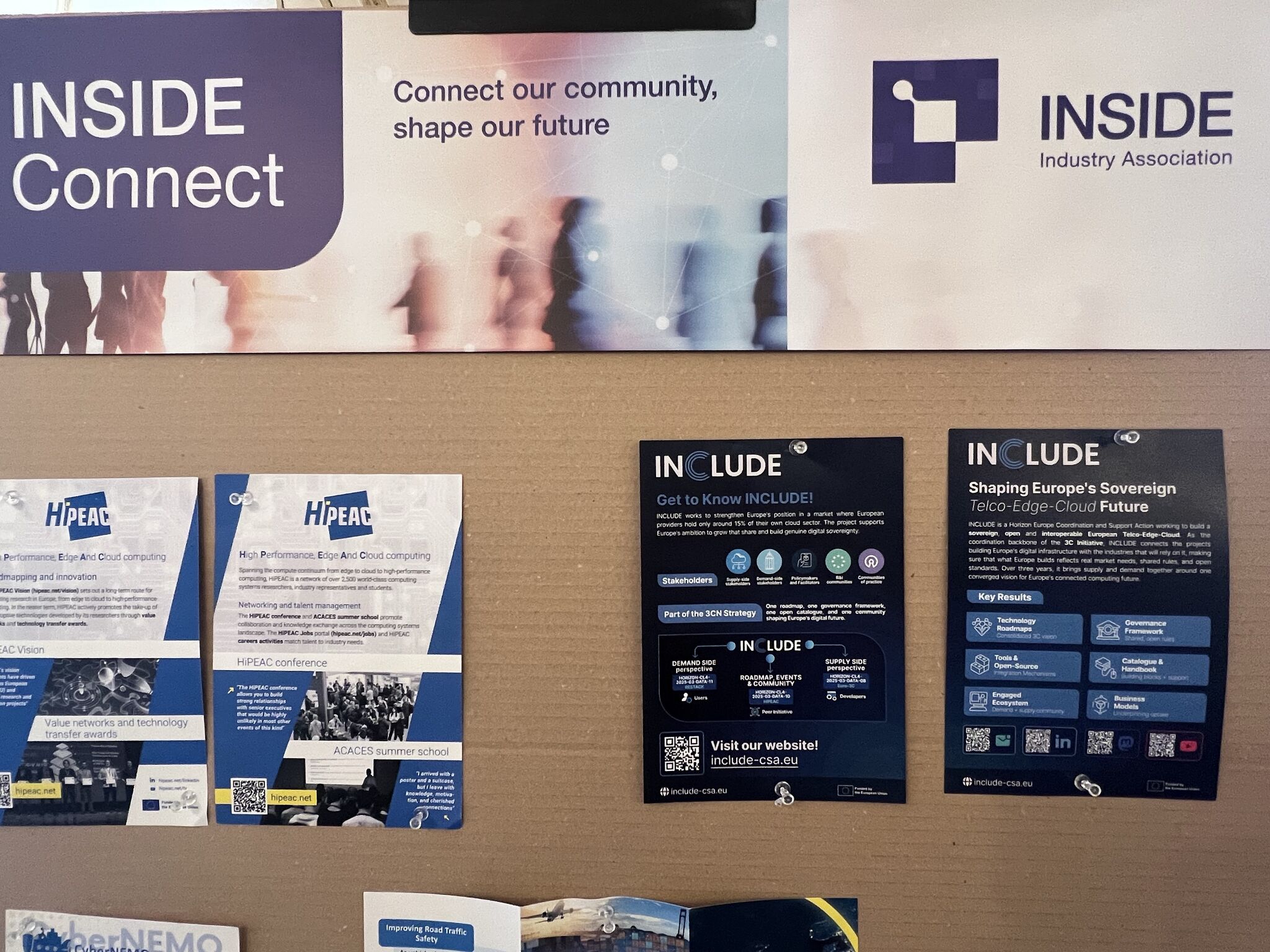
The week continued in Palermo, where INCLUDE spent time among the audience at INSIDE Connect 2026, the European Digital Systems Roadmapping Forum. With its focus on Europe's digital and semiconductor future, from the Chips Act 2.0 to the edge-to-cloud continuum, the event gathered many of the demand-side and industrial voices whose needs sit at the centre of INCLUDE's work. It was a valuable chance to listen, learn, and follow the conversations shaping Europe's digital backbone, and to leave a few INCLUDE flyers behind for curious minds along the way.
Looking ahead
Europe already has the pieces, and the task now is to connect them. INCLUDE left both events more convinced than ever that the hardest and most important work lies in alignment, and more motivated to help make it happen.